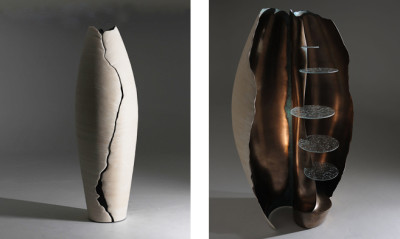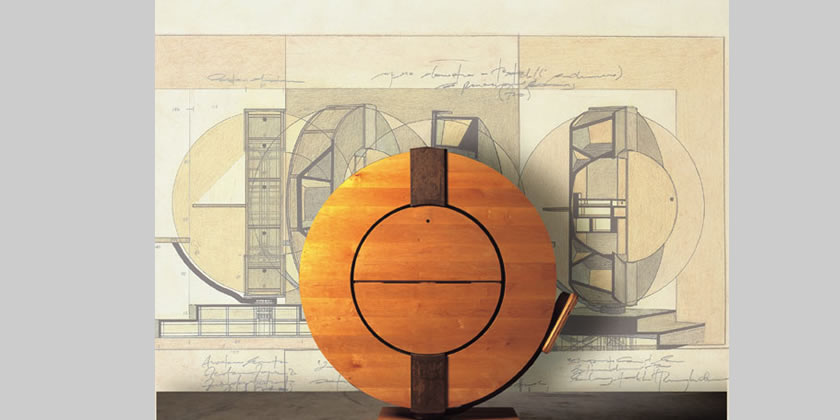
Arthouse Contemporary is supporting the Nigerian Pavilion at the 15th Venice Architectural Biennale, entitled Diminished Capacity, featuring the work of Nigerian artist and architect Ola-Dele Kuku, taking place from May 26 to November 27, 2016 at the Spazio PUNCH – Guidecca, Venice, Italy. Diminished Capacity marks the first time that Nigeria has had a dedicated pavilion at a Venice Biennale edition.
According to the curator, – Camilla Boemio, in her note, Diminished Capacity intends to analyse a historical transaction moment with the ambition to rewrite history, starting from Nigeria to provide unpublished interpretations. In this condition, to rewrite history becomes a necessary evolution.
The wrong reading of Africa transforms the continent itself into a country poised in perpetual opposition to restlessness; what is its identity in forms and structures?
“Africa is not a country!” In that conflict, the first Nigerian Pavilion wants to prospect new methodologies. Conflict is one of the recurrent themes in the work of Ola-Dele Kuku. The architect–artist sees that as one of the driving mechanisms in our world, and as a tool to set change in motion. “Conflict has played a crucial role since the dawn of creation, from the stories of the Big Bang to the paradise of Adam and Eve.”
Throughout his practice, Ola-Dele Kuku has consistently reshaped representation in a timely challenge. Working with drawing, installation, and objects, he has revisited the mainstays of architectural representational methods – plan, elevation, section – to inject unsettling slippages into their rigorous formalism. This new body of work fully embraces an analytical socio-philosophical slant that confronts complex issues such as resource depletion and their management, migration, micro and macro global changes, and the diminished capacity of countries amplified by multiple applications of manipulative strategies.
The artist, Ola-Dele Kuku said in the artist’s note that: “the proposed project theme titled Diminished Capacity is a reflection of the contemporary global phenomenon of ‘Socio-Cultural Conflicts’, with specific focus on the role of ‘Information / Communication’ and the ‘Mass Media’. The exhibition will be presented as a reaction to the frictions of social communication and the mass media, vis-à-vis the notion of a unitary tendency of society and common values. The contemporary sociology of mass media communication reveals a consistent presentation of agendas rather than reports which are illustrated by selected interest in particularities, focus and oversight.”
About The Author