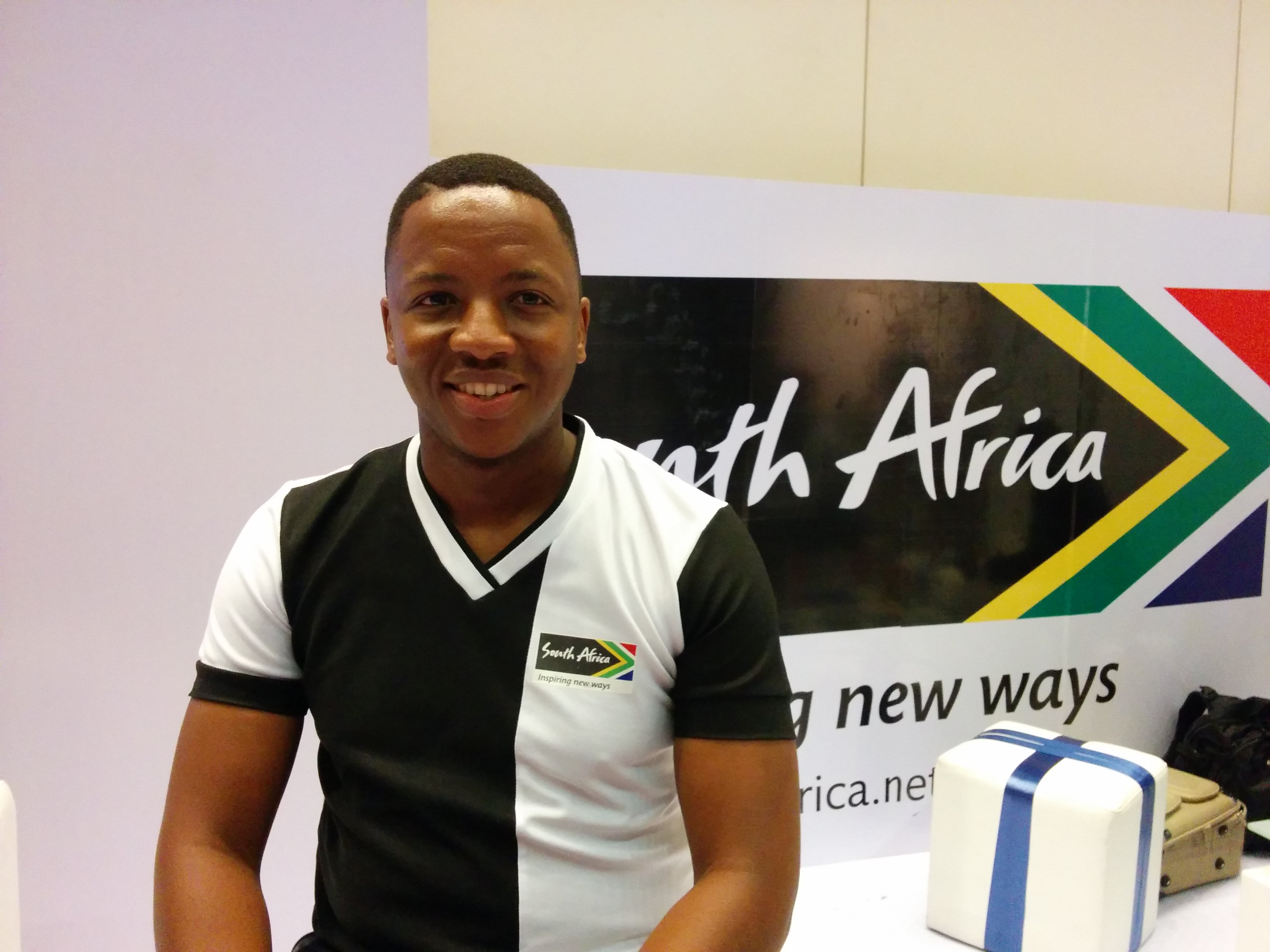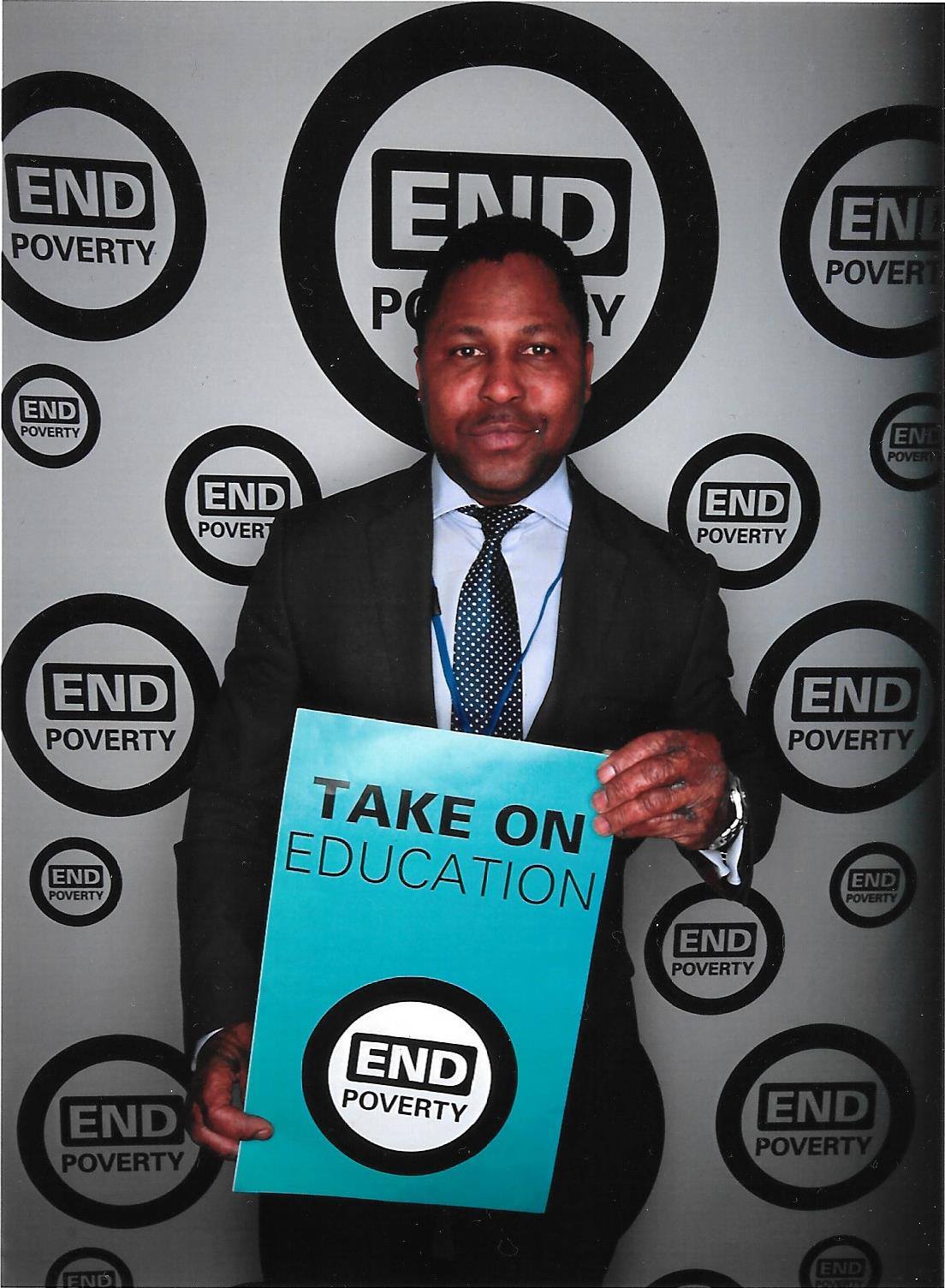
OLALEKAN FADEYI is the Programs and Policy Director at International Centre for Development Initiatives (ICDI) who is passionate about filming documentaries that highlight social issues. In this interview, he tells BEATRICE ISOLA, about his new projects.
Starting Out
ICDI is an independent research and educational organisation and resource centre incorporated in United Kingdom and Nigeria, specialises in qualitative research, engagement and advocacies for social, human and educational development.
ICDI is an impact driven organisation with an unbiased commitment to promoting leadership positions, youth empowerment, qualitative education, social reforms, participatory and good governance, using human development and capability-based approaches (HDCA) to development. At ICDI, we consult and conduct researches for multilateral organisations, and l have had the amazing privilege to work on a couple of global development projects with organisations such as the World Bank, IMF, the British Council, Commonwealth of Learning (CoL) to mention but a few, and we are still developing.
I went into private consulting practice and started ICDI in 2009 after l left my banking job as a Mortgage Specialist with Lloyds Banking Group (LBG) the biggest banking group in the UK. I got tired of a 9 to 5 office job at some point. I am an extremely creative person. You can’t box a creative person in one place. It wasn’t easy starting a company with international operations across several countries, but God has been very faithful to me.
I had my B.Sc in Sociology at Olabisi Onabanjo University (OAU), and my Masters in NGO and Development Management from the prestigious University of East London (UEL) United Kingdom. I am based in the UK and I have also had the wholesome opportunity to do several professional and development courses across different countries of the world and spoken on several global platforms on development.
I am also trained as a documentary film maker at the London Academy of Media, Film and TV. So, we have a multimedia arm of ICDI called O’lovely Studios where we conceptualise, create and shoot development documentaries and sell only to foreign television channels. So far, we haven’t done much with Nigerian local channels but we are hoping that will come at some point soonest.
 Interest in film production
A lot of things really! First, I will say I love documentaries, particularly those that document histories, acts of bravery or lifestyles of a people. l watch a lot of them. After my Masters programme in development management, I had an eye-opener and developed a massive interest in several development issues across Africa, and the first thing I realised is that Africans don’t showcase itself yet enough to the world. Unlike Africans, the Asians do that a lot, particularly to the western world. They tell their own stories, and they constantly put it in the face of the western world, and that is why for instance, it is easy for an Asian organisation to get funding supports for development projects than an organisation from Africa. Western charities and foundations understand their realities more than those of Africa. They see these in many of their film and documentary productions constantly almost on a daily basis. And I thought, unless Africans get to start telling their own stories, their own narratives, no one will tell it for them. What we often get is occasional western news reporters who are commissioned to come to African countries. Sometimes, on a one-off basis to do stories of particular interests to their western news outlets. This will be told according to their brief; the way they want it told, what they want their audience to believe.
More often than not, these stories don’t appropriately represent the narratives and true experiences of Africans. For instance, you must have seen the deluge of adverts shown by western charities to their audience on their TV. How they portray Africa as a collection of poor countries; of wretched people with no good to offer. This often annoys me. Even so-called mainstream media do it a lot too. So I thought, until Africans begin to tell their own stories then we won’t have a change in the status quo. This is exactly what informs my foray into development documentaries and film production.
l have been trained on film editing and professional video animations. l realised if you have to deliver compelling stories, then you have a total experience. By the grace of God, I am progressing and soon hopefully we will scale up to influence and impact on Africa in the right directions. I know there is still a lot this our generation have to do, with respect to development, learning and unlearning.
Interest in documentaries
As I said earlier, I carved this unique area for myself, particularly because l truly don’t want to do what every other person is doing out there or someone else has been doing. I wanted to do something different, unique and new. What can make an impressionable impact on developing Africa, particularly Nigeria. Nigeria has a lot of potentials and if our generation cannot do better than our previous generations then l don’t know what else we can make of ourselves. I love other genres of documentary too, but my interest is in development documentaries and that is what l have been doing.
Number of documentaries produced
At the moment, quite a few. Over the three years that l have gone into making development documentaries, most of them are commercial productions. We sell them as contents to foreign television channels that buy the rights from us. We rarely put them online except their previews and short-ads.
Favourite documentary
Of all my works, I so much love the one that focused on British Marriages to Foreigners and their relation to Migration and Development. They are all on YouTube and you can search for the previews on Google too. The full contents are usually shown by TV stations who buy their full or partial rights.
 Experience documenting social issues
For me, documenting social issues has been very fulfilling. It has been an eye-opener, particularly in the areas of learning, entrepreneurship and youth development. Africa still has a lot to do. For instance, in Nigeria, we have youths who are very intelligent, very enterprising, yet very divisive with politics. This has a tolling effect of distracting their energies for learning, and focusing on development. This discovery has fuelled my passion to want to do more for the Nigerian youths, particularly in the areas of Enterprise and Business Development.
New projects
Yes, there are a few documentaries I am working on now. In London, we are chronicling the lifestyle and works of enterprising Africans, and Nigerian Fashion Designers who have been doing the country proud. We are also working on those serving the Nigerian communities with foods, providing restaurant services and food importation, etc. However, aside from these documentaries, there is also in the tool-work a massive first-of-its-kind Enterprise and Business Development School that we are looking to establish in Nigeria soonest.
For now, l will keep the name close to my chest until it is officially unveiled. We have a well-researched business plan, currently. We are at the advance stages of talking and negotiating with financiers as well as investors who are interested in the ground-breaking concept. I feel strongly that it is high time Nigerian professionals in diaspora began to contribute their quota to Nigeria development. We must begin to use our global leverage and experiences to support the new administration. We have also tried reaching out to various arms of Nigerian government. We hope to form some level of partnerships with them by the time we establish the school, because we are going to be operating across the 36 states of the federation, including the FCT Abuja. The Enterprise school is going to support businesses, innovations and provide between 350,000 and 500,000 jobs annually for Nigerians and particularly our youths. This is unprecedented and ground breaking, particularly in clearing the high level of unemployment ravaging the country, and we hope that the government will encourage this.
Marketing contents
All of our television and documentary contents are marketed directly as portfolios by our marketing team to the various television stations we are working with. We sometimes put some of the information online on our website wwww.icdi-uk.net. Interested clients too contact us when they want to buy. Hopefully, when we start working with local channels we will explore other avenues for marketing our contents with these category of new clients. Doing business in Africa with African clients is an entirely different model, so we have to be able to attend to the needs of these demography if and as at when required.
Funding projects
It is true that film production is capital intensive, very capital-intensive. However, all of our documentaries and film productions are self-funded. Though, l sometimes do a couple of partnerships here and there if and when the opportunities permits. But largely the productions are funded via ICDI O’lovely studios. Maybe in the future, we will get to the point where our works will be funded externally. Luckily for us at ICDI, we have been able to establish our own multimedia studios in Lagos. Our O’lovely Studios is located in Ogba Lagos. A few of our friends and partners come in to see and sometimes hire our facilities for their productions. We’ve got state of the art and new technologies and equipment.
OLALEKAN FADEYI can be reached at mailus@icdi-uk.net or (UK) +447741348484 or (Nigeria) +2348177226811
About The Author