NAOMI NDUBUEZE
Nigeria is on the move to re-organise the creative sector with the recent announcement by the Federal Government on Monday partner with CNN and UN World Tourism Organization (UNWTO) to enhancement the Creative Industry in Nigeria, using the film industry.
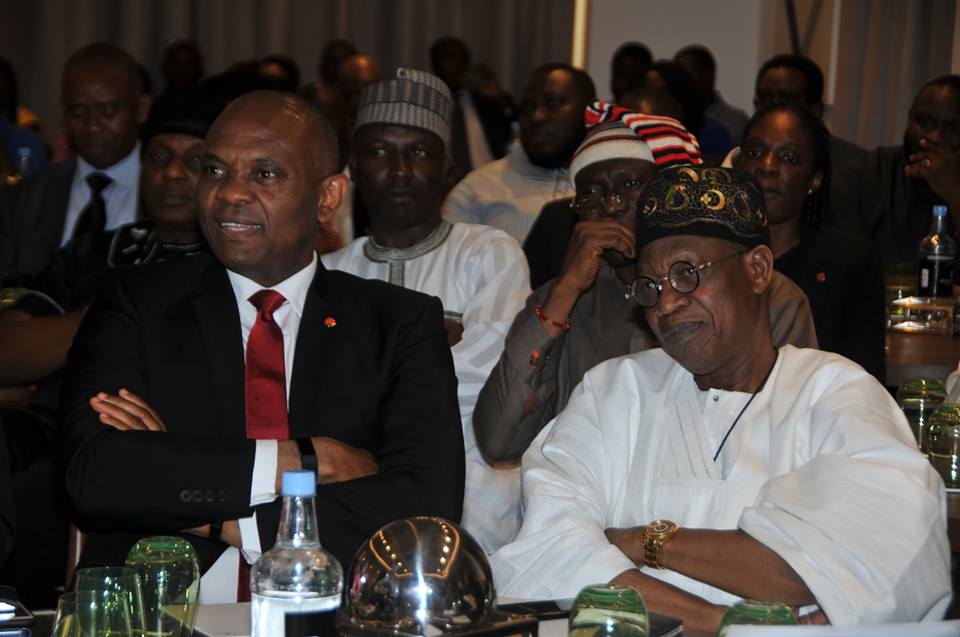
Lai Mohammed, Minister of Information and Culture, announced the partnership in Lagos on Monday, at the Creative Industry Roundtable, said under the partnership, the film industry will be used ”as a lens through which we will project various aspects of the Nigerian Culture, Tourism and similar areas”.
”We are kick-starting the project with a 13-episode production showcasing the various stages in a movie production. These include the choice of location, which will allow us to showcase the various beautiful sceneries available in Nigeria; the choice of wardrobe that will show the rich options in the country’s fashion industry; the choice of sound track that will highlight our rich music genres, the casting that will showcase our abundant talents and the technical part that will provide the platform to show that there is no camera and other gadgets that we don’t have here.
”As part of the project, we will also run a programme on CNN showcasing the 20 Nigerians to watch in the Industry. The Nigerians to be showcased will be selected by the industry players themselves to ensure authenticity,” the Minister said.
He said the tripartite partnership, as well as the MoUs with the Tony Elumelu Foundation, the Bank of Industry and the British Council, were part of the efforts by the Federal Government to transform the Creative Industry to a Creative Economy.
Mohammed said that he organized the Creative Industry Roundtable, which was well attended by industry players, to show the Federal Government’s willingness to work with the private sector in the transformation of the Creative Industry to a Creative Economy.
”This Administration has no doubt that the plan to transform the Creative Industry to a Creative Economy must be driven by the private sector. After all, it is self-evident that the modest growth that has been achieved in the Creative Industry so far, whether in films, music or fashion, has been achieved in spite of the government. It therefore stands to reason that with the government providing the necessary enabling environment and the private sector in the driver’s seat, the transformation can be realized within a short time,” he said.
The Minister said the Roundtable was not intended as another talk shop, adding: ”The stakeholders who are here are already aware of the problems mitigating against the seamless growth of the industry, hence I don’t expect us to spend quality time here today rehashing those problems. Instead, we should devote our time to seeking practical solutions to the problems we have earlier identified at many fora.”
Mohammed reiterated his earlier statement that the Creative Industry is Nigeria’s new oil, saying statistics from other countries, including the UK and the US, attest to this.
”The Creative industry contributed 84.1 billion Pounds Sterling to the British economy in 2014. According to figures released by the Department for Culture, Media and Sport, that was an increase of 7 billion pounds on the year before. The figures also show that the number of jobs in the industry grew by almost 9% between 2013 and 2014 – almost double the rest of the economy as a whole (4.6%). One of the areas of strongest growth was in film, TV, video, radio and photography, which rose almost 14%.
”In the United States, the Creative Industry, including Hollywood and broadcasting, contributes more to the U.S. economy than previously thought, the government said in its first official analysis of the arts and culture sector’s economic value. The 2015 report from the National Endowment for the Arts and U.S. Bureau of Economic Analysis shows arts and culture contributed more than 698 billion dollars to the economy, which is about 4.32 percent of U.S. goods and services,” he said.
The Minister said the deliberations from the Roundtable would feed into a larger event, the Creative Industry Financing Conference, slated for 17-18 July at the Eko Hotel in Lagos.
”To highlight the importance attached to this sector by the Federal Government, no less a personality than the Acting President, Yemi Osinbajo, will declare that Conference open,” he said.
Later, attendees went into different breakout sessions where top issues affecting the industry were discussed and solutions proffered for them by various members
Obi Asika, CEO of Dragon Africa and member of COSON, speaking on the issue of infrastructural development discussed on his table explained the fact that the Federal Government has the biggest infrastructure in the country which is under-utilized. He mentioned the need to build and provide a better infrastructure for the industry.
“There are over 30 football stadia in the country. If we could hold concerts there and collect N1,000 from 30,000 that will cost us about N30 million and we will not need to be charging N10,000 for events. The private sectors need to advocate for all these things to happen, the government cannot do everything. The is every need to build more theatres and a solid relationship with the private sector, government and finance,” he said.
Also speaking at the event, Tony Elumelu, chairman, UBA Group said he never knew the creative industry has the capacity to generate a N100, million at a show until Obi Asika of Storm 360 narrated how this is possible. According to him, most bank CEOs are not aware that kind of huge return is possible hence they needed to be educated about this at the Bankers’ Committee which will make possible for them to design ways to offer financial support to the industry.
About The Author