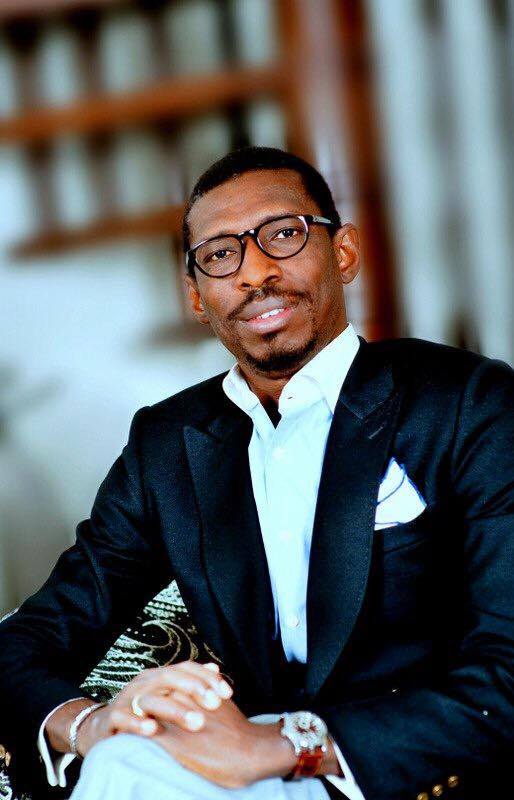
His name, O. Paul Andrew, may sound foreign. But as the chairman, African Wealth Report (AWR), he is a Nigerian who has an uncanny interest in the arts and the files of Wealth Management. In this interview, he tells FUNKE OSAE-BROWN about his journey into visual art and using it as an alternative means of investment.
Our meeting that breezy Thursday morning in July was at the Eko Signature, Victoria Island, Lagos. I arrived about ten minutes before our 10am appointment. I called him to announce my arrival. He said he would join me at the lobby in another 15 minutes. He made it down before the 15 minutes. We have never met before although I had seen his pictures a couple of times before our meeting. As he walked towards me, I could easily put a face to the famous name.
I had encountered the African Wealth Reporter (AWR) which he chairs, previously. But I have never met the brain behind it. I would later discover in the course of our interview that there are many sides to Paul Andrew.
Andrew has a good knowledge of the global wealth and luxury industry and he has embarked on a mission to teach high net worth individuals on how to manage their wealth. In addition to being a wealth advisor, Andrew is passionate about visual art. He is a gifted painter. He loves to work with colours splashed on canvas. He is also an avid art collector.
“I love colours, sculptures,” he tells me as soon as our interview began. “I mean I love anything art.”
As an avid art collector, he founded ArtDeluxe, his private art collection established in 1983. He would later fused ArtDeluxe into Luxury Passion Holding Genève (LPHG) in 2009 located in Genève, Switzerland. LPHG is the luxury lifestyle sub-unit of the Private Office of Paul Andrew Group.
ArtDeluxe was originally set-up to advice, manage artists and clients. However, Andrew later added a twist to the offerings of ArtDeluxe to offer personalised and attentive service to a unique clientele.
“The concept of art collection came as a result of my flair, my love for the art,” Andrew explains. “I started this at a pretty young age. I took a bit from the Oshogbo Art School several years ago.”
His first collection was bought by an American who took almost about twenty pieces. “That went to the United States,” he recalls. “And she called to tell me she placed the collection in an exhibition. I also have few friends who took some of my collections to the UK. They did an exhibition in absentia for me. When I moved into the wealth management space, I decided to develop it further by acquiring and collecting art pieces. That’s how the whole concept started.”
This has led him to educate other collectors and enthusiasts regarding visual art as a means of viable investment. He says a piece of art can appreciate in value over the years depending on the collector.
“You got to have eyes for it and you have got to know what you are investing in. in Nigeria, things are a bit overpriced. But I can understand that the artist will like to be valued but it depends on who is buying it. For instance, some of the paintings I acquired in the past, some were sold at a loss while some where sold with huge profit. What informs that is who is buying and the mood of buying it.
“I remembered I collected from a young artist who is based in the united states, I commissioned him to do beautiful pieces. I think he painted on rice on white paper which was pretty unique. When I was trading them off to my colleague who is a collector, I had to give him the paintings at the price I think he could afford. So, there was no profit motive behind it. Now he is got the paintings. But I believe it must have appreciated in value. That was about 18 or 20 years ago.
He also says the value placed on an art work depends on the calibre of the artist. “It all depends on the artist himself. Onobrakpeya is as good as Picasso the difference is just geographical location. He is still a living legend, Picasso is late. The moment you are gone, your material becomes hotcake and it is well priced and valued. They know you are no longer alive to replicate that so they tend to place higher value, or premium on works that they know it is difficult to replicate.”
For him, art collection is not just about either contemporary or modern art but the whole concept is to capture anything that is art. Sculpture, furniture, fittings, interior, just name it. That’s what brought him into the space as a collector.
ArtDeluxe is also into art dealership as it offers wholesale dealership of fine art specialising in paintings, and sculpture by African Artists from the 20th century to present.
“In addition we offer art brokerage. Our brokerage services are for galleries, private dealers and collectors. With our local knowledge and connection, we have the resources to locate many works of art that are not available on the primary market. We represent well-known and emerging artists. We manage all aspects of exhibition and distribution. We have established channels of distribution, both traditional and non-traditional. Creatively merging with the artist to continue their works on platform that suits them.”
Furthermore, through ArtDeluxe, Andrew sources and appoints artists for commissioned works. He helps to manage budgets, designing and implementing contractual arrangements for commissioned artists and coordinating the realisation process.
“We work with artists and clients to create the perfect piece,” he explains further. “Estate & Collection Liquidation: we manage the sale and management services for large estates of artists and collectors. Handling individual works, artefacts and voluminous collections. We work with institutions, individual collectors, heirs and trustees.”
Andrew’s love for the art was fuelled by his encounter with one of the Oshogbo artists, Babatunde Odunlade, who discovered the talent expressed in his works. He was impressed by what he had done. Odunlade collected some of his pieces.
With over 200 works in his collection some years ago, Andrew finds a new form of investment in the art. He began to sell some of them to close friends with little or no profit initially.
“I used to own over 200 pieces, but a lot has been sold, collected. I have done over 30 pieces for Tunde Odunlade, that was when it all started as an expressionist. But parental wise, they just would want me to practice my core, get an education. And that is what changed the whole concept of me doing pure art.”
On arrival in Switzerland several years ago, Andrew revived his creative side. He took to his brushes, paints and canvas again and began to create new interesting pieces. He spent most of his summer holidays doing at least about two or three paintings which have evolved into what he calls The Forty Pieces. “I have increased that to about sixty,” he says proudly. “Right now, I am not collecting to sell. I am collecting to keep which is a form of wealth. Which is investment style just to have around me to be sold. I will properly have to give them out to charity in future. I will auction them and let the money go straight into my foundation. I would rather want to keep them for now.”
About The Author